
When to Muzzle Train Your Dog

When you have a fearful dog, it’s a good idea to muzzle train them.
Wait. I said that wrong.
When you have a dog, it’s a good idea to muzzle train them.
Yeah, that’s better.
Now, I know most people don’t have a dog that’s afraid of people, or aggressive toward people, and you might even have a dog who loves their vet. That doesn’t mean that if your dog is savagely attacked and is bruised, swollen, and bleeding badly, they won’t bite when someone tries to see if anything is broken.
How about: your dog was hit by a car, and you’ve raced him to emergency, and now they’re trying to take him from you, which involves jostling his broken leg.
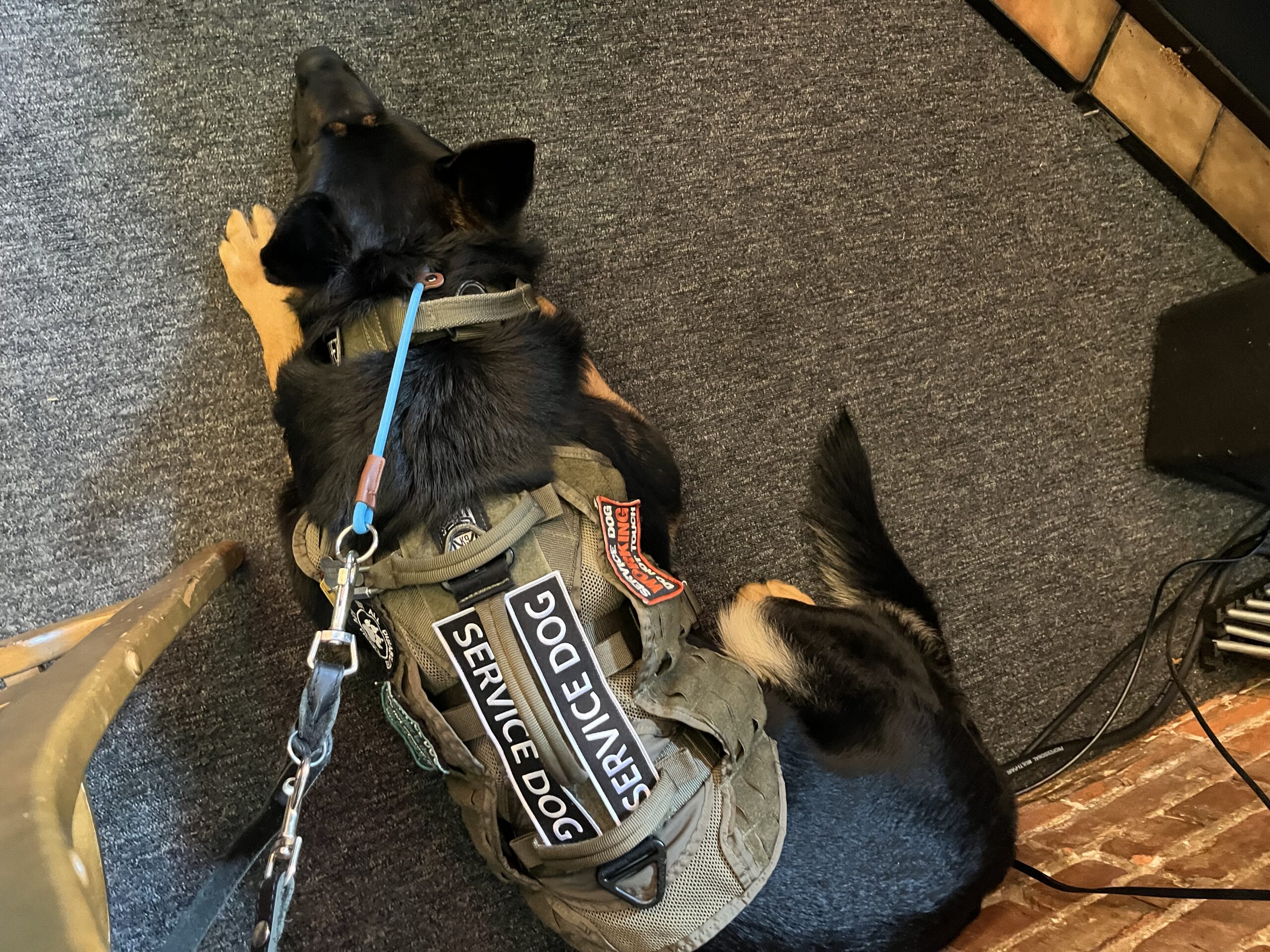
Or: your dog has developed such severe food allergies that they sometimes go into anaphylactic shock, but they’re your service dog and you’re going to a baseball game, and you’re working on an automatic leave it but don’t have it down pat yet, and your dog CANNOT eat whatever food has fallen on the ground. (*coughs*Doc*coughs*)
All of these are good reasons to have your dog muzzle trained. Let’s go back to that broken leg scenario: the emergency vet (who’s probably been bitten before) wants to put a muzzle on your dog to keep everyone safe until they get him drugged up on pain killers. They do muzzle your dog, but your dog isn’t muzzle trained. Now, flooded with adrenaline from a bad experience, your dog’s mouth is suddenly out of commission. Your dog, not understanding what’s happening, starts trying to claw the mask off. The vet now needs an extra person to keep them from succeeding, or, if the vet doesn’t catch it, your dog’s going to claw their own face.
Maybe not. Maybe, with all the other things going on, your dog won’t even notice a muzzle, or they’ll freeze if they do. But do you really want to add that extra stress onto your pupper?
Also, most vets/groomers/emergency personnel use those little cloth muzzles that hold the dog’s mouth closed. Those aren’t safe for very long. Taking away your dog’s ability to sweat can have them overheating very, very quickly. Basket muzzles are much safer (for everyone, actually), even though they make your dog look like Hannibal. It’s best to have your dog trained to one and preferably bring it with you. (I used to keep mine in the car.)
So some things about muzzles: I already mentioned you want a basket muzzle. If your dog is going to be around other dogs, I recommend a metal one. (I really like the BronzeDog brand, which makes muzzles for specific breeds and can be found on Amazon.) This way, they can still “correct” or defend themselves with a “nip” if they need to. (Metal can feel a lot like teeth.) Fair warning: you’ll probably get some bruises from your happy dog when they aren’t being careful with their face. You’ll learn to jump out of the way pretty quickly.
The silicone brands that are sold at most pet stores are pretty good, too. Silicone can be heated and molded to fit your dog’s face better (but pay attention to the instructions, don’t just heat it up and hope you did it right). I recommend taking your dog with you to a store, pulling the muzzle out of the box, and trying it on. (Pet stores are hating me right now.) Please put it nicely back in the box so your local store people don’t have to. (Pet stores are hating me less right now.)
No muzzle should rest against your dog’s nostrils, as that can impair their breathing. Take a close look at photos if you’re buying online: if the muzzle slips back, will it rest against the nostrils? If the answer is yes, don’t buy it.
The muzzle should have enough room for the dog’s mouth to open and the tongue to come out and pant. A lot of people like the leather muzzles because they’re less intense looking, but they often aren’t big enough for safety. Check that there’s a good inch (on a big dog) or more for your dog’s mouth to open.
If you have a breed with a square head (pitties, rotties, labs, so many more), you’ll want to make sure you buy a muzzle built for that. Look for breed-specific muzzles.
DO NOT DO NOT DO NOT put a “normal” muzzle on a smooshy-faced dog (called encephalitic breeds) like bulldogs, Lhasa apsos, and pugs. They have special mesh muzzles made just for them.
Okay, so you have your muzzle and you’ve decided to muzzle train your dog for emergency purposes. Good for you! There’s a lot of ways to do it, and you should check out the Muzzle Up Project for a ton of how-to videos, written instructions, photos, and support. But to get started, this is my favorite way:
Swap out your dog’s bowl for a small pail or a tupperware that’s narrow enough to drop the muzzle in, nose-down. Then put your dog’s meal into the muzzle-in-a-bucket. Your dog is going to lose all hesitation diving their face into that muzzle within a single meal, maybe two if they’re really unsure. If your dog doesn’t mind being bothered while they eat, start flipping the straps over their head and across their ears. You can even buckle them (make sure it’s loose and/or you can unbuckle it quickly and easily) if your dog doesn’t care about the straps flipping.
Here’s a counter intuitive tip: let your dog take it off. Help him, preferably. Hopefully you always take it off before they try to, but if you don’t, help them. We don’t want your dog panicking in the muzzle. It’s better that they think they can take it off when they want, and then eventually don’t feel the need to, than having them think they’re trapped and need to periodically tear it off their own face.
Okay! Now off I send you to the Muzzle Up Project, which has even more detailed instructions and better videos than I do!
Muzzle up, kiddos!
Jenna